New Book, New Exhibit For Wharton Esherick Museum
by Victoria Rose, Arts Editor
Lead photo by Charles Uniatowski.
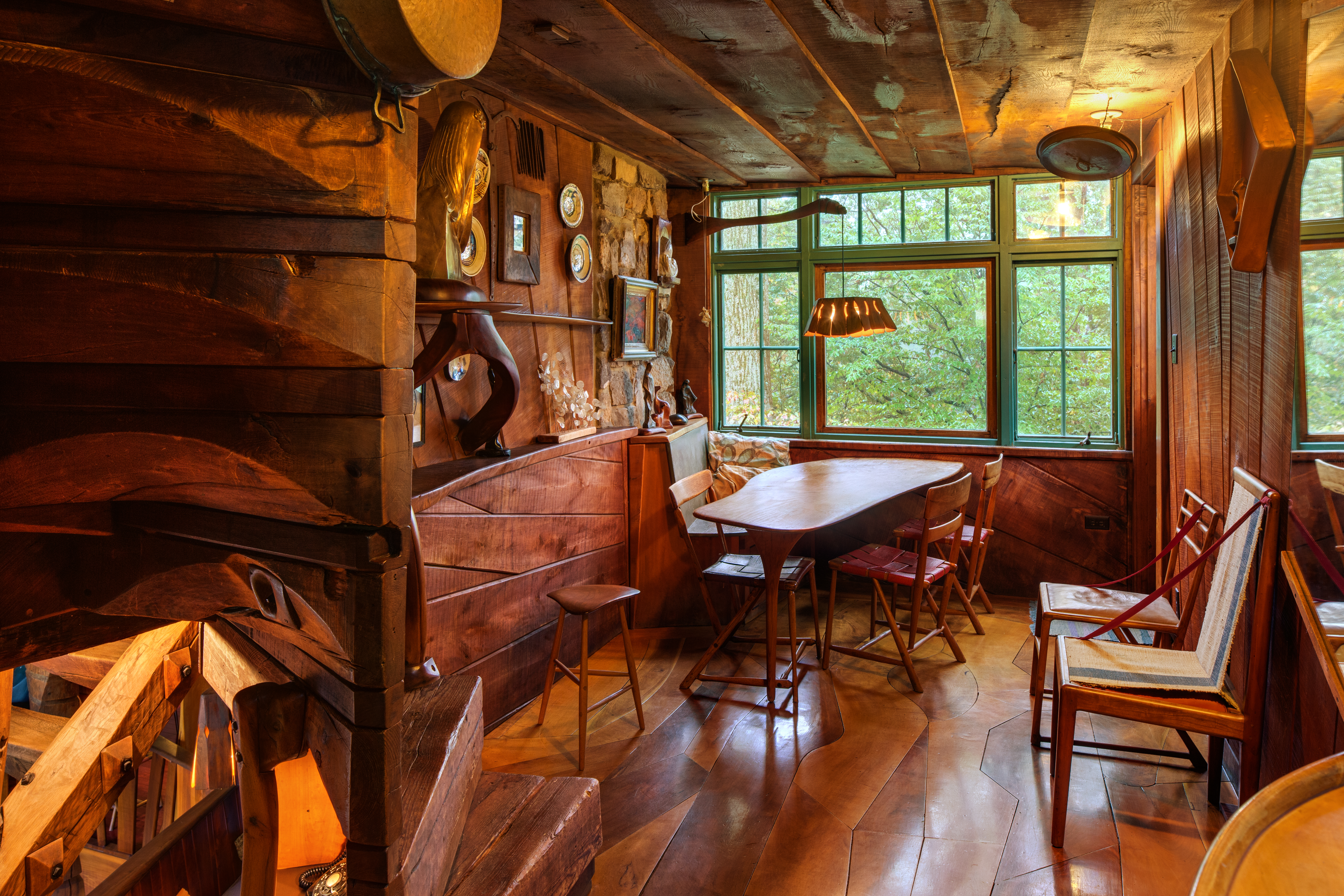
Wharton Esherick Museum is a hidden gem of art, craft, and creativity. Atop the rolling Valley Forge Mountain, nestled among towering trees, the museum was originally the home, studio, and workshop of Wharton Esherick, the renowned artist who worked in sculpture, woodworking, painting, poetry, furniture design, and more. Since opening as a museum in 1972, the buildings and treasures they hold have showcased how design, form, and function intertwine to become works of art.

Now a National Historic Landmark for Architecture, the Malvern museum is a jewel box for more than 3,000 pieces created by the man considered to be the father of the Studio Furniture Movement. On October 1, 2024, Rizzoli will publish a gorgeous book titled The Crafted World Of Wharton Esherick. Filled with photos and essays by a troupe of acclaimed scholars, the book coincides with the museum’s upcoming exhibit at Brandywine Museum of Art. Also called The Crafted World Of Wharton Esherick, the Brandywine Museum of Art exhibit runs Oct. 13, 2024 – Jan. 19, 2025.

Wharton Esherick was born in 1887 in Philadelphia to an affluent family. Instead of going into banking, as his family wished him to do, he studied drawing and printmaking at the Pennsylvania Museum School of Industrial Art and then painting at the Pennsylvania Academy of Fine Arts. He left just before graduating, preferring to create his own style rather than following the tradition of Impressionist painting prevalent at the time. In his early career, Esherick worked as a commercial artist, creating illustrations for books and magazines.


Esherick and his wife Leticia “Letty” Nofer Esherick were drawn to progressive utopian communities, spending time in the 1910s at Marietta Johnson’s School of Organic Education in Fairhope, Alabama. They wanted a rural life for their young family, and moved to a small farm outside of Paoli that they named Sunekrest, pronounced “sunny crest.” It was an ideal location, with a uniquely shaped octagonal schoolhouse down the hill that Esherick used as an early painting studio. They had enough land to grow their own food, should his paintings not find buyers.

Esherick’s first forays into woodworking were born of necessity, as he needed frames to display his paintings. Rather than creating simple shapes, he carved designs into the wood frames. They began drawing more attention than the paintings he was attempting to sell. “The frames immediately sang with a voice that is distinct,” said Julie Siglin, executive director of the Wharton Esherick Museum. Esherick began working with John Schmidt, a neighbor and cabinetmaker who shared his workshop, tools, and woodworking skills and helped create many of the early pieces which Esherick designed and carved in his unique style.

Despite the Great Depression, Esherick’s career and art continued to grow throughout the 1930s. He saw every surface, line, and object as an opportunity for artistic expression. “He found joy in the challenge of creating something beautiful,” said Katie Wynne, deputy director of operations and public engagement. His creations utilize the texture and patterns of the wood itself, like “painting with woodgrain,” Wynne said, indicating the surface of one of Esherick’s desks.

Esherick began building his studio in 1926, adding elements throughout his life. Visiting the museum is like entering another world where every nook and cranny, from the buildings themselves to the items they contain, is an artistic journey. “You get to know Esherick’s mind as a builder,” said Siglin. “The ephemera makes it a very visceral place to visit.”
The studio became a home for Esherick in the 1940s, as he added living quarters for himself after he and Letty separated. They continued to have a friendly relationship for the rest of their lives, frequently corresponding and keeping each other apprised of their various creative and educational endeavors.
Collaboration was a frequent feature of Esherick’s life, whether with family, neighbors, craftspeople, or performers. He and Letty were deeply involved in Hedgerow Theatre, the resident repertory theatre which has been a haven for artists for over 100 years. Letty, as well as their children performed onstage, as did Esherick occasionally under the pseudonym “John Henry.” He contributed artistically to Hedgerow, creating woodblocks for posters, set pieces and costumes, and unique staircases and additions to the theatre itself.


The Museum is focusing on “the collaborations and networks that support a creative life,” Wynne said, highlighting research and narratives that showcase not only Esherick’s art, but the craftspeople and architects that contributed to the buildings. For example, the 1956 workshop was a collaboration between Esherick and the architecture office of Louis I. Kahn, including the architect Anne Tyng. The workshop is a master artwork itself, featuring Tyng’s vision of “inhabitable geometries.” It brings to mind a beehive, with its overlapping hexagons and inventive use of catenary cables to create an open internal structure.

Visiting the Wharton Esherick Museum feels like stepping into a secret world. The Experiencing Esherick Tour showcases the studio and grounds, with each guide highlighting different aspects of Esherick’s life and art. Adding perspectives to the story are various Topic Tours that appeal to visitors with interests in architecture, oral history, and other subjects.
Wharton Esherick Museum Visitor Information
- 1520 Horse Shoe Trail, Malvern, PA
- The museum is open Thursdays – Sundays from March – December.
- Tickets must be purchased in advance.
- Low-heeled shoes are requested to protect the wood floors.
- Tours of various length and topics are available.
- Tours limited to 8 people at once.
- The museum does not have a café.
- Due to the historic, hand-built nature of the building and multiple staircases that connect upper and lower levels, significant portions of the Studio are not accessible for individuals who use wheelchairs, walkers, or have other mobility needs.
For more information, visit WhartonEsherickMuseum.org. To read about The Crafted World Of Wharton Esherick exhibit at Brandywine Museum of Art, click here.
Connect with Main Line Tonight!
Join the in crowd! Get our stories delivered to your email inbox.


3 responses to “Wharton Esherick Museum: The Insider’s Guide”
[…] New Book, New Exhibit For Wharton Esherick Museum in Malvern […]
[…] more about Wharton Esherick in The Insider’s Guide To The Wharton Esherick Museum, Victoria Rose’s fabulous piece about the Malvern artist and furniture […]
[…] Visiting the museum is like entering another world where every nook and cranny, from the buildings t… […]